

Lassonde School of Engineering
York University, Canada

Andrew Eckford is an Associate Professor in the Department of Electrical Engineering and Computer Science at York University, Toronto, Ontario. His research interests include the application of information theory to biology, and the design of communication systems using molecular and biological techniques. His research has been covered in media including The Economist, The Wall Street Journal, and IEEE Spectrum. His research received the 2015 IET Communications Innovation Award, and was a finalist for the 2014 Bell Labs Prize. He is also a co-author of the textbook Molecular Communication, published by Cambridge University Press.
Andrew received the B.Eng. degree from the Royal Military College of Canada in 1996, and the M.A.Sc. and Ph.D. degrees from the University of Toronto in 1999 and 2004, respectively, all in Electrical Engineering. Andrew held postdoctoral fellowships at the University of Notre Dame and the University of Toronto, prior to taking up a faculty position at York in 2006. He has held courtesy appointments at the University of Toronto and Case Western Reserve University. In 2018, he was named a Senior Fellow of Massey College, Toronto.
Gordon S. Marshall Chair in Engineering
Department of Electrical and Computer Engineering University Southern California, US

Urbashi Mitra received the B.S. and the M.S. degrees from the University of California at Berkeley and her Ph.D. from Princeton University. She began her academic career at The Ohio State University. Dr. Mitra is currently https://viterbi.usc.edu/directory/faculty/Mitra/Urbashi the Gordon S. Marshall Professor in Engineering at the University of Southern California with appointments in Electrical Engineering and Computer Science. Dr. Mitra is a Fellow of the IEEE. She was the inaugural Editor-in-Chief for the IEEE Transactions on Molecular, Biological and Multi-scale Communications. Dr. Mitra has served as an Associate or Area Editor for multiple IEEE publications. Dr. Mitra was a member of the IEEE Information Theory Society’s Board of Governors (2002-2007, 2012-2017), the IEEE Signal Processing Society’s Technical Committee on Signal Processing for Communications and Networks (2012-2017, Vice-Chair 2024), the IEEE Signal Processing Society’s Awards Board (2017-2018), and the Chair/Vice Chair of the IEEE Communications Society, Communication Theory Technical Committee (2017-2020). She is the recipient of: the 2021 USC Viterbi School of Engineering Senior Research Award, the 2017 IEEE Communications Society Women in Communications Engineering Technical Achievement Award, a 2016 UK Royal Academy of Engineering Distinguished Visiting Professorship, a 2016 US Fulbright Scholar Award, a 2016-2017 UK Leverhulme Trust Visiting Professorship, 2016 IEEE Communications Society Women in Communications Engineering Mentoring Award, IEEE Communications Society (2015-2016) and Signal Processing Society (2024) Distinguished Lecturer, 2012 Globecom Signal Processing for Communications Symposium Best Paper Award, 2012 US National Academy of Engineering Lillian Gilbreth Lectureship, Student Best Paper Award, as co-advisor, at the International Conference on Signal Processing and Communications, Bangalore India 2012, the 2009 DCOSS Applications & Systems Best Paper Award, Texas Instruments Visiting Professor (Fall 2002, Rice University), 2001 Okawa Foundation Award, 2000 OSU College of Engineering Lumley Award for Research, 1997 OSU College of Engineering MacQuigg Award for Teaching, and a 1996 National Science Foundation CAREER Award. She is most recently, the general co-chair for the IEEE International Symposium on Information Theory, 2024, Athens Greece. Dr. Mitra has held visiting appointments at: King’s College, London, Imperial College, the Delft University of Technology, Stanford University, Rice University, and the Eurecom Institute. Her research interests are in: model-based machine learning, wireless communications, communication and sensor networks, biological communication systems, and the interface of communication, sensing and control.
Department of Information Science
Osaka Metropolitan University, Japan
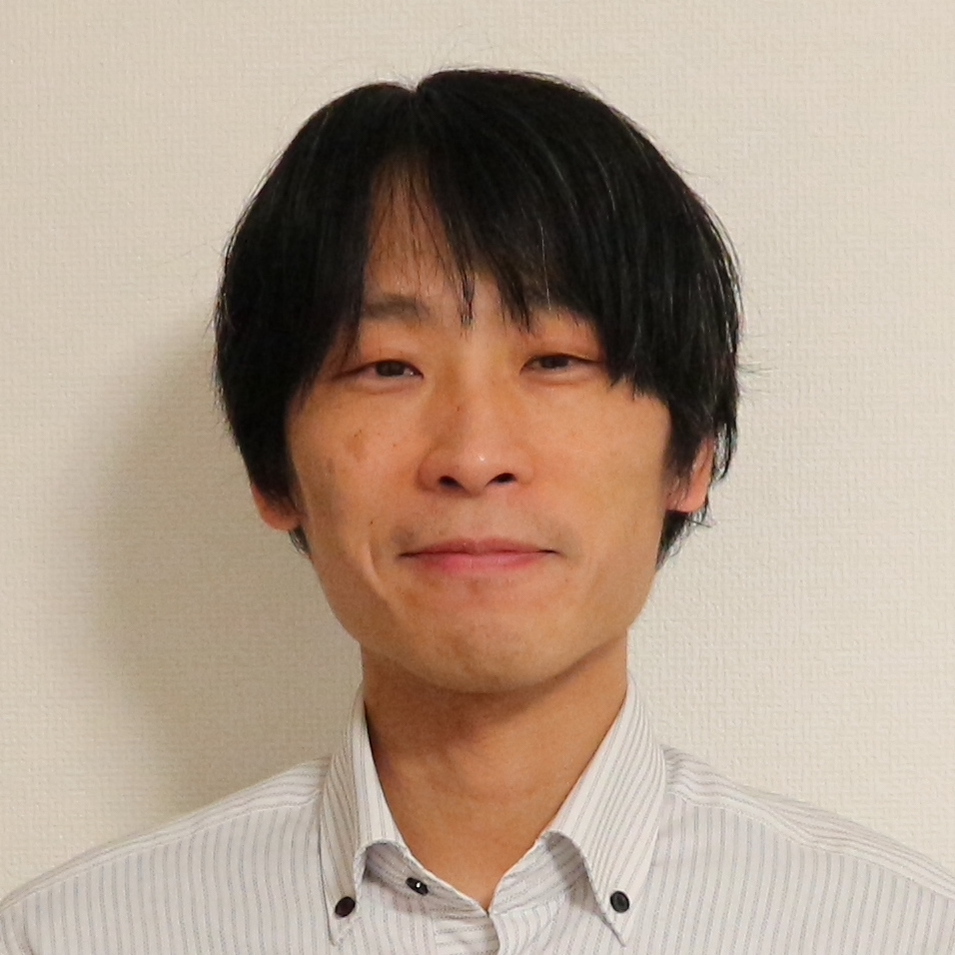
Tadashi Nakano is a Professor of the Graduate School of Informatics at Osaka Metropolitan University, Japan. Dr. Nakano is also an associated editor of the IEEE Transactions on Molecular, Biological and Multi-scale Communications (T-MBMC), an associate editor of the IEEE Transactions on NanoBioscience (TNB), and an editor of the Elsevier Nano Communication Networks. Dr. Nakano is the author of Molecular Communication (Cambridge University Press, 2013 and 2024). Dr. Nakano has served as the chair of the IEEE Emerging Technologies Subcommittee on nano-scale and molecular communication (currently, MBMC Technical Committee) (2017-2019). Dr. Nakano has been engaged in research at the intersection of computer science and biology, including design, implementation, and evaluation of molecular communication systems, synthetic biological systems, and biologically inspired systems.
Department of Chemistry
University of Cyprus, Cyprus
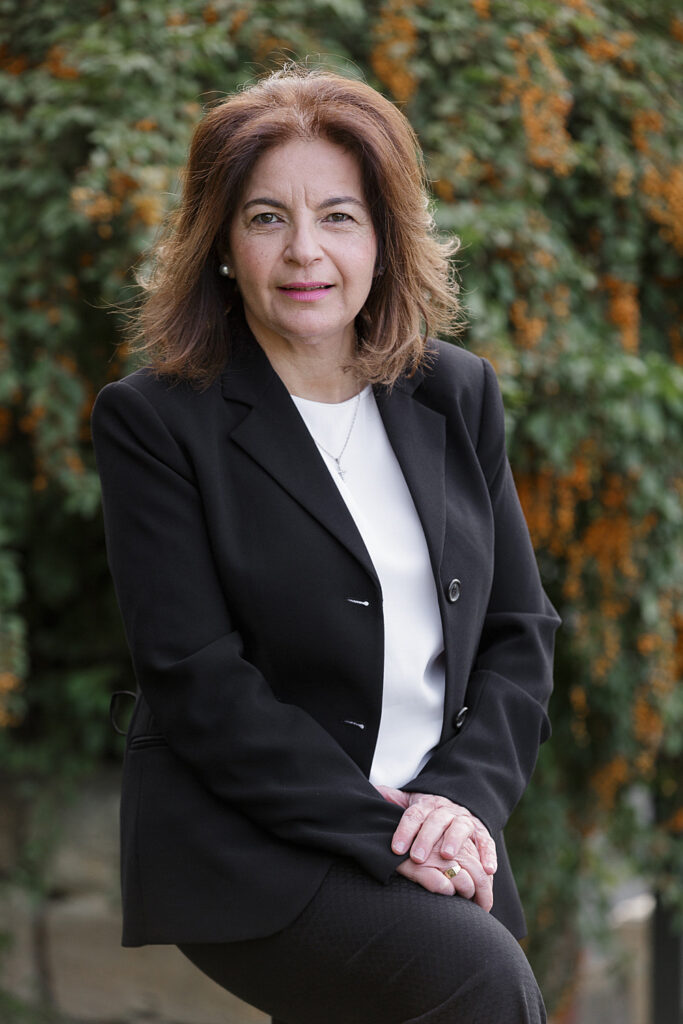
Harvard Club of Cyprus co-founder, Research Director of EPOS-Iasis, R&D and Head of the Translational Nanomedicine and Nanobiotechnology Lab through a special academic appointment at the University of Cyprus, leads revolutionary Translational Research in Nano-biotechnology, Externally Controllable Molecular Communications for Cancer sensing and therapy, including wearable and implantable devices, supporting Digital Twin and Internet of Biothings evolution and implementation. She is a graduate of University of Athens Medical School and conducted her doctoral research and clinical post-doctoral studies at Dana – Farber Cancer Institute, Discipline of Tumour Immunology and Fred-Hutchinson Cancer Research Center. She was First Price recipient of CyEnterpreneurship Competition through which she established EPOS, leading a vibrant interdisciplinary team for Translational Nanomedicine, Cell Therapies and Hybrid (cell+electronics) Theranostic Systems. She has attracted national and EC funding amassing € ~7.5M, including IAPP and ITN MSCAs, IMI, R& I Actions and three most prestigious EIC Pathfinder grants on management of brain pathologies with Externally Controllable Molecular Communications. Her innovative findings in Optical Biosensing Interfaces and Targeted Nano-therapeutics have been secured in 8 patents (5US, 2EPO, 1WIPO) and published in peer-reviewed papers, book chapters and monographs. Scholarly Activities include Foundation and first Vice-Chairmanship of the European Federation of Biotechnology-Section of Medicines Development and Cluster Management Group, EUREKA Cluster on New Safe Medicines Faster. She has been an evaluator in EC FP7, H2020, ERC, EUROSTARS, EUREKA, Independent Expert Panel (Nominated by the Cyprus Research and Innovation Foundation), Norway Programs, Ministry of Science, Poland, STRATEGMED, EuroNanoMed- Invited Expert, 2017-2020. She is a member of the EITHealth, a ‘knowledge and innovation community’ a ‘knowledge and innovation community’ (KIC) of the European Institute of Innovation and Technology, strengthening innovation transfer potential. Currently she serves on the HORIZON Europe EIC Transition Jury. Her work integrating Biomedical Sciences, Biomedical Engineering and Artificial Intelligence, contributing to clinically applicable emerging technologies for the management of Cancer and Neurodegenerative Disorders has been acknowledged by the International Academy for Medical Education (IAMED) with an honorary membership.